Table of Contents
ToggleDirect Answer
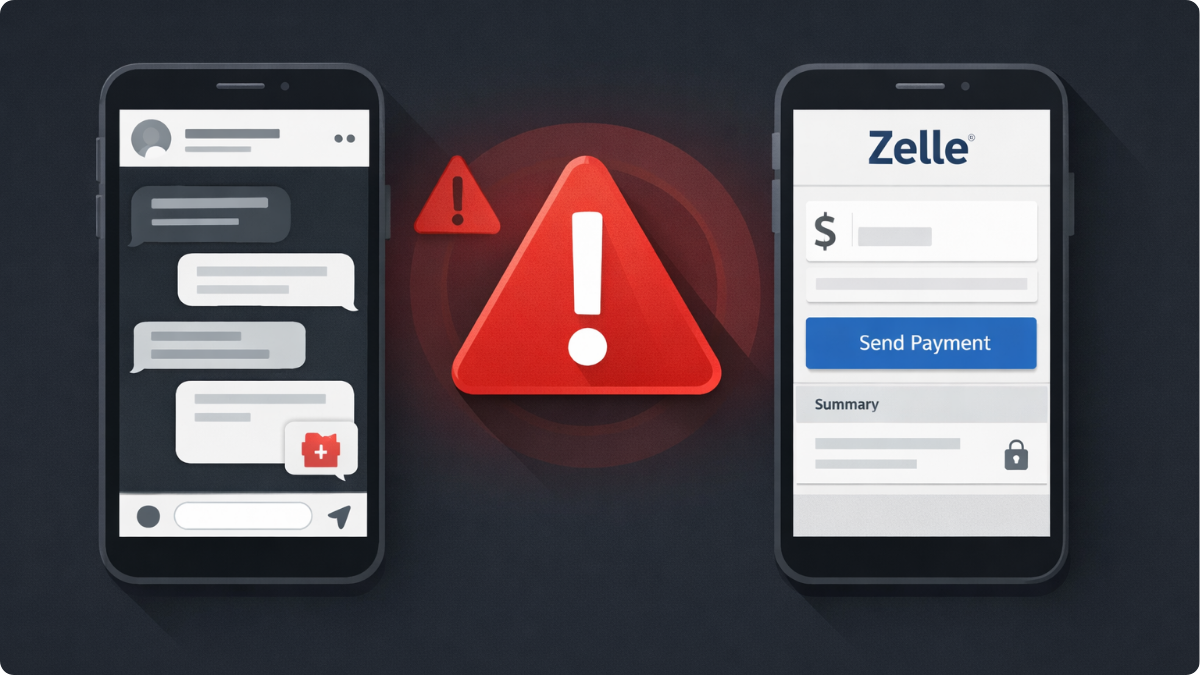
Zelle social media scams are payment fraud schemes that begin on platforms like Facebook, Instagram, or online marketplaces and end with victims sending money through Zelle. These scams are increasing because social platforms make it easy to impersonate real people, while Zelle’s instant payments leave little room to stop a transaction once it’s sent.
What Are Zelle Social Media Scams?
Zelle social media scams are not hacks of the Zelle system itself. They are social engineering scams—meaning the fraud happens through manipulation, not technical failure.
Here’s how they work in simple terms:
-
A scammer contacts someone on social media
-
They build trust or create urgency
-
They convince the victim to send money via Zelle
-
The payment is authorized by the victim and sent instantly
Zelle is attractive to scammers because:
-
Payments move quickly between banks
-
Transfers are designed for people who already trust each other
-
Once money is sent, it’s difficult to reverse
It’s important to separate Zelle misuse from Zelle as a service. Zelle is a legitimate peer-to-peer payment network used by millions. The scams happen before the payment—on social media—where identity is easy to fake and verification is weak.
How These Scams Usually Start
Most Zelle scams don’t start with payment apps. They start with conversation.
Common platforms involved
-
Facebook (especially buy/sell groups)
-
Facebook Marketplace
-
Instagram (DMs and story replies)
-
Messaging apps linked from social profiles
Typical opening tactics
-
A buyer messages about an item for sale
-
A seller offers a deal that seems unusually convenient
-
An account impersonates a friend, family member, or business
-
A message claims there’s a “problem” that needs fast payment
Psychological pressure points
Scammers rely on:
-
Urgency (“I need this now”)
-
Trust (“I’m local” or “I know your friend”)
-
Simplicity (“Zelle is faster than cash”)
The goal is to move the conversation quickly from the social platform to payment—before doubts set in.
Common Types of Zelle Social Media Scams
Fake Buyer Scam
A scammer pretends to buy an item you listed online. They may:
-
Agree to the price immediately
-
Claim they’ve “sent” payment already
-
Ask you to send money back to “confirm” or “upgrade” the payment
Example pattern:
You’re selling furniture. The buyer sends a fake email claiming Zelle needs a small payment from you to release funds.
Overpayment Scam
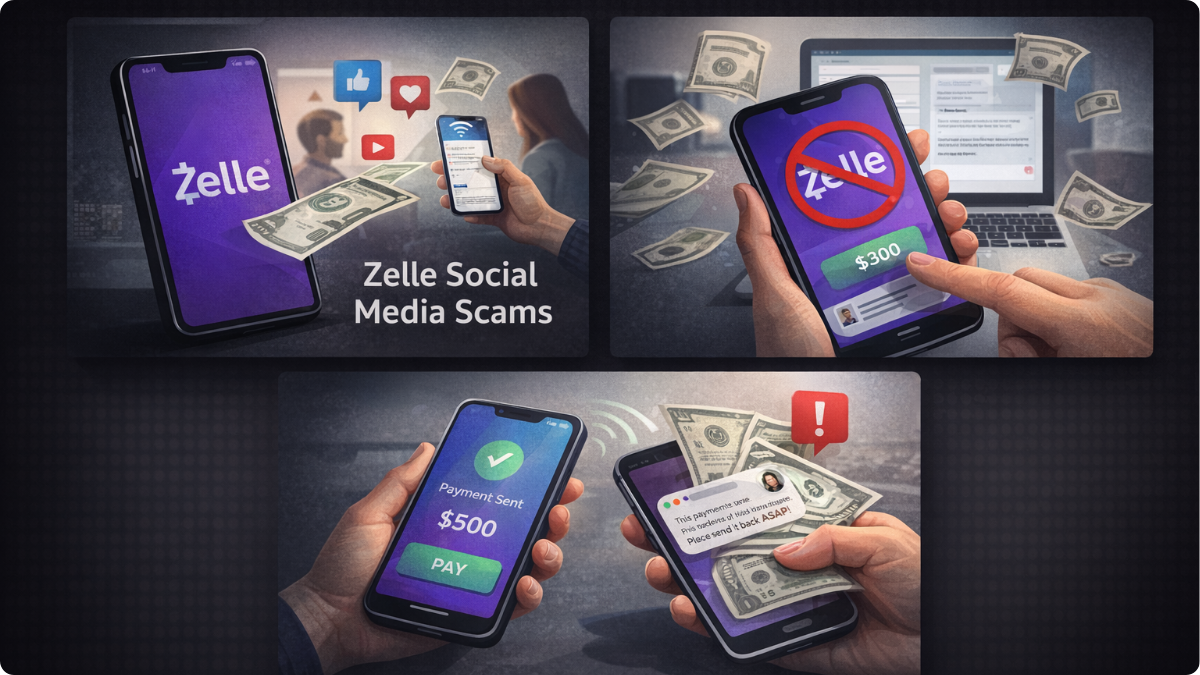
The scammer claims they accidentally sent too much money and asks for a refund.
What actually happens:
-
No real overpayment occurred
-
Any “refund” you send goes directly to the scammer
This tactic relies on politeness and panic rather than technical trickery.
Account Takeover Scam
A scammer gains access to a real social media account (often through phishing) and messages that person’s contacts.
Because the account looks familiar, people are more likely to trust the request.
“Accidental Payment” Scam
You receive a message claiming money was sent to you by mistake and asking you to return it.
In many cases:
-
The payment never existed, or
-
It came from a compromised account
Real-World Scam Examples (Non-Sensational)
These scams often look ordinary, not dramatic.
-
A college student sells a phone through Marketplace and is asked to “verify” payment by sending a small Zelle transfer.
-
A parent receives a message from a familiar profile asking for quick help paying a bill.
-
A small business owner is contacted by a fake customer using copied branding and profile photos.
The common thread is contextual trust—the situation feels normal enough to lower defenses.
Why Zelle Payments Are Hard to Reverse
Zelle is designed for speed and convenience between people who know each other.
Key reasons reversals are difficult:
-
Instant transfers: Money moves quickly between banks.
-
User authorization: The payment is approved by the account holder.
-
Scam vs. fraud distinction:
-
Fraud often involves unauthorized access
-
Scams involve authorized payments under false pretenses
-
Banks can look into the issue, but they often cannot get the money back. This is especially true if the receiving account has already withdrawn or moved the funds.
For a deeper breakdown of how Zelle scam payments work and why recovery is difficult, see our detailed guide on Zelle social media scam payments.
What To Do If You’re Scammed
If you believe you’ve been caught in a Zelle social media scam, time matters.
Immediate steps
-
Contact your bank right away
Ask to speak with the fraud department. -
Secure your accounts
Change passwords and enable extra security. -
Report impersonation
Flag fake profiles on the social platform. -
Document everything
Save messages, usernames, transaction details.
These steps don’t guarantee recovery, but they help limit damage and support investigations.
Legal & Safety Perspective (High EEAT)
Zelle social media scams sit at the intersection of:
-
Online identity abuse
-
Payment system design
-
Platform responsibility
Regulation often lags behind scam tactics because:
-
Platforms evolve faster than laws
-
Scams cross state and national borders
-
Responsibility is shared among users, platforms, and financial institutions
These scams also highlight gaps in current social media law, especially around platform accountability and fraud prevention.
At the same time, user awareness plays a critical role. Reviewing online profiles carefully—similar to a social media background check—can sometimes help spot impersonation or fake accounts early.
How to Avoid Zelle Social Media Scams
Practical prevention focuses on slowing down.
Safer habits
-
Use Zelle only with people you personally know
-
Verify identities through a second channel
-
Be skeptical of urgency or pressure
Red flags to watch for
-
Requests to send money to “confirm” payment
-
Screenshots instead of in-app confirmations
-
Profiles with limited history or copied content
Consider alternatives
For online transactions with strangers:
-
Use platforms with built-in buyer protection
-
Meet in person when possible
-
Avoid peer-to-peer payments for sales
FAQs
Are Zelle social media scams common?
Yes. Reports have increased as peer-to-peer payments and online marketplaces grow.
Can banks refund Zelle scams?
Sometimes, but not always. Outcomes depend on timing and circumstances.
Is Zelle safe to use online?
Zelle is safe for trusted contacts. Risk increases with strangers.
How can I spot a fake buyer?
Watch for rushed behavior, refusal to meet, or unusual payment requests.
Are screenshots proof of payment?
No. Always verify inside your bank or Zelle app.
Do scammers target specific groups?
Scammers adapt tactics, but anyone using social platforms can be targeted.
Final Thoughts
Zelle social media scams thrive on speed, familiarity, and misplaced trust—not on flaws in the payment system itself. Zelle is a legitimate tool, but it was never designed for transactions with strangers.
The most effective protection isn’t fear—it’s awareness. Slowing down, verifying identities, and understanding common scam patterns significantly reduce risk. Informed users are harder targets, and education remains the strongest defense.