Introduction
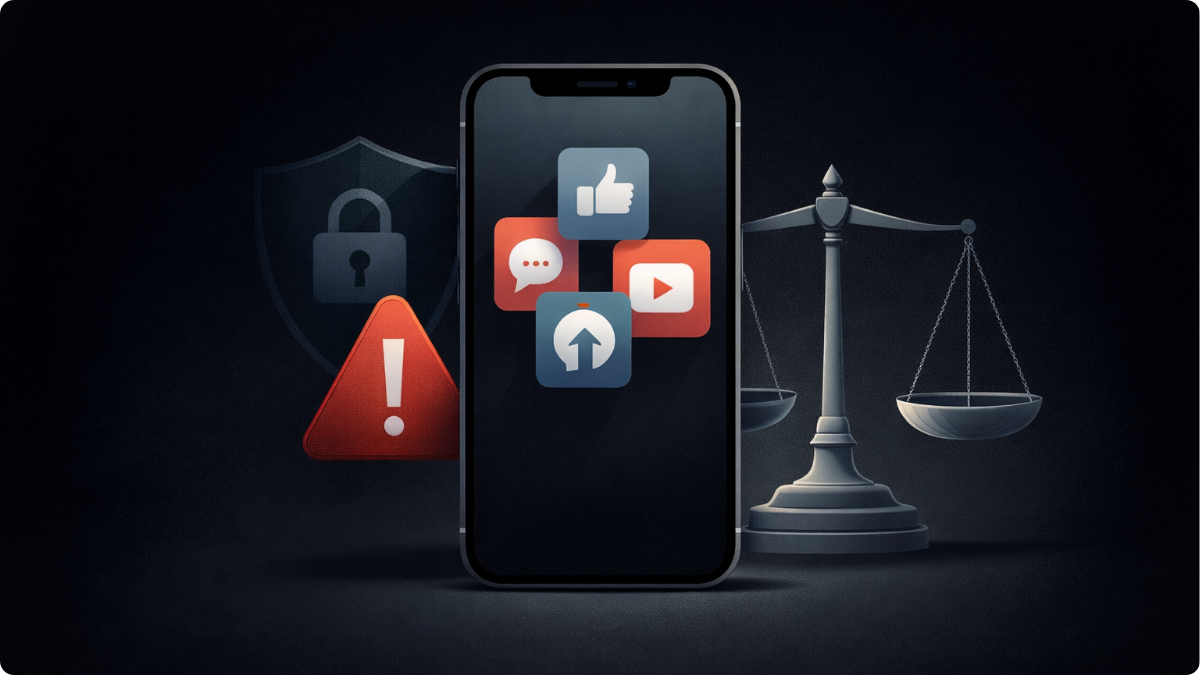
Social media law is the growing body of rules that governments use to regulate how digital platforms operate and how users interact on them. These laws shape everything from age limits and data privacy to how harmful content is handled and how platforms cooperate with authorities. If social media once felt like the “wild west” of the internet, that era is clearly ending.
Why now? Because social platforms are no longer just places to share photos or opinions. They influence elections, commerce, child safety, mental health, and even crime. As usage expanded, so did concerns—from data misuse to online scams to the impact of algorithm-driven content on young users. Lawmakers, often criticized for moving slowly, are now trying to catch up.
These regulations affect almost everyone: everyday users scrolling for news, parents worried about what their children see online, creators building audiences, and businesses relying on digital ads. While this article focuses mainly on developments in the United States, social media law is a global issue. What happens in one country often influences policies elsewhere.
This guide explains social media law in plain language—what it is, why it exists, how it works in practice, and where its limits are. The goal isn’t to alarm or lecture, but to inform. Understanding the rules helps users make smarter, safer decisions online.
What Is Social Media Law?
At its core, social media law refers to government-enforced rules that apply to online platforms and their users. These are different from a platform’s own community guidelines or terms of service.
In simple terms:
-
Platform rules are private policies set by companies.
-
Social media laws are public rules created by governments and enforced through courts or regulators.
Another important point: these laws vary widely. Each country—and in the U.S., each state—can take a different approach based on local values, politics, and legal traditions. That’s why something allowed on a platform in one place may be restricted in another.
Types of Social Media Laws
Age Verification & Child Safety Laws
Many recent laws focus on protecting minors. These rules may:
-
Require platforms to verify users’ ages
-
Limit data collection on children
-
Restrict certain types of content for underage users
The goal is not to ban social media, but to reduce exposure to harmful material and excessive data tracking.
Data Privacy & User Protection Laws
Privacy-focused laws regulate how platforms collect, store, and share user data. They often address:
-
Consent requirements
-
Data breach notifications
-
Limits on selling or sharing personal information
These rules aim to give users more control over their digital footprints.
Content Moderation & Censorship Laws
Some laws dictate how platforms must handle:
-
Illegal content
-
Harassment and threats
-
Misinformation during emergencies or elections
This is one of the most controversial areas, balancing free expression against public safety.
Advertising & Influencer Disclosure Laws
When social media became a major advertising channel, regulators followed. These laws may require:
-
Clear labeling of sponsored content
-
Transparency in political advertising
-
Restrictions on deceptive marketing practices
Law Enforcement & Investigation Policies
Social media law can also define:
-
When platforms must respond to legal requests
-
How long data must be retained
-
What user information can be shared with authorities
Social Media Laws in the United States
In the U.S., regulation is split between federal and state-level authority. There is no single, comprehensive “social media law,” but a patchwork of rules. Some states have gone further than others, with examples like Florida’s aggressive approach to youth access and content moderation.
Federal Oversight
Federal agencies such as the Federal Trade Commission focus on:
-
Consumer protection
-
Deceptive practices
-
Data security failures
These rules apply nationwide but are often broad.
State-Level Laws
States have become laboratories for social media regulation. For example:
-
Florida has passed laws addressing platform moderation and youth access.
-
Mississippi has focused on age verification and child safety.
-
Virginia has explored data privacy and consumer rights in digital spaces.
For users, this means the rules can change depending on where they live—even when using the same app.
How Social Media Laws Affect Users
Regular Users
Most people notice these laws through:
-
New age checks
-
Updated privacy settings
-
Changes in how content is recommended or removed
Parents & Teens
Parents may see:
-
Stricter age requirements
-
More parental control tools
-
Limits on targeted advertising to minors
Teens may experience restricted features or content visibility.
Content Creators & Influencers
Creators are affected by:
-
Disclosure requirements for sponsored posts
-
Platform enforcement aligned with local laws
-
Potential account limitations based on location
Businesses & Advertisers
For businesses, social media law can change:
-
How ads are targeted
-
What claims are allowed
-
Record-keeping requirements for campaigns
Common Questions & Misconceptions
Can social media platforms legally ban accounts?
Yes. Platforms can enforce their own rules, as long as they don’t violate applicable laws.
Are private messages protected by law?
They are generally more protected than public posts, but not absolutely. Legal access can occur under specific conditions.
Can police view social media content?
Public content is accessible to anyone. Access to private data typically requires legal authorization.
Do social media laws apply outside the U.S.?
Yes, but they differ by country. Users traveling or posting internationally may be subject to multiple legal frameworks.
Connection to Online Scams & Safety
Weak or outdated regulation often creates openings for fraud. Social platforms are frequently used to promote fake sales, impersonation schemes, and payment scams.
For example, peer-to-peer payment fraud linked to social networks has surged in recent years. Our in-depth guide on zelle social media scam payments explains how these schemes work and why recovery is difficult.
Background screening has also become more common, and many employers now review online presence through a social media background check, raising new privacy and legal questions. Employers and organizations increasingly review online presence, which is why understanding a social media background check is now part of digital literacy.
Laws try to limit these risks, but enforcement often lags behind new tactics.
What Social Media Laws Cannot Do
It’s important to be realistic. Social media laws:
-
Do not eliminate scams entirely
-
Do not guarantee account recovery
-
Do not replace cautious online behavior
These laws provide frameworks, not personal protection. This article is informational and not a substitute for professional legal guidance.
Final Thoughts
Social media law reflects a simple reality: digital platforms have become too influential to remain unregulated. While the rules can feel confusing or inconsistent, their purpose is to balance innovation with safety.
For users, the best approach is awareness—not fear. Stay informed, review platform updates carefully, and understand how local laws shape your online experience. Social media will continue to evolve, and so will the laws that govern it.
2 thoughts on “Social Media Law: What It Means, Who It Affects in 2026”