Introduction
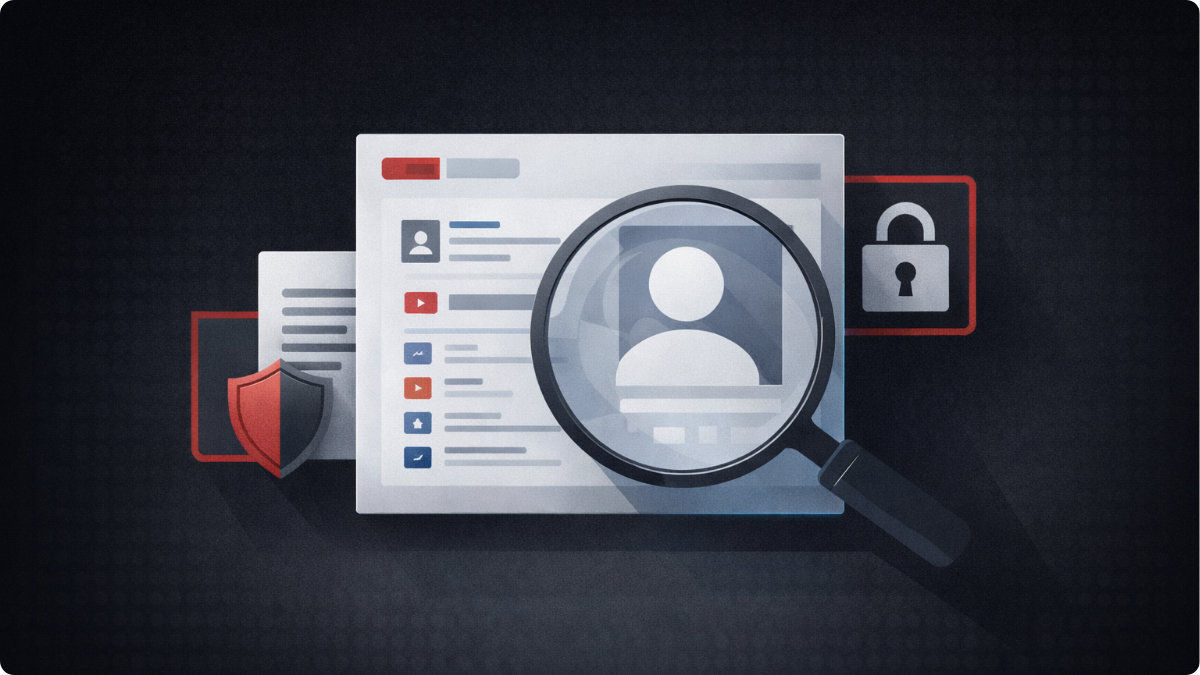
A social media background check is the practice of reviewing a person’s publicly available social media activity to better understand their behavior, interests, and online presence. It has quietly become a standard part of how employers hire, schools evaluate applicants, landlords screen tenants, and even how individuals assess personal safety. In many cases, this review happens without formal notification—simply by looking at what is already visible online.
The rise of social media background checks is closely tied to how much of modern life now plays out online. Posts, photos, comments, and connections can paint a picture that goes far beyond a résumé or application form. For decision-makers, these checks are seen as a way to reduce risk, avoid reputational harm, or confirm that someone’s public conduct aligns with expectations.
At the same time, social media background checks raise real questions about privacy, fairness, and accuracy. What is actually visible? What is off-limits? And how reliable are these reviews in judging someone’s character or intent?
This article explains social media background checks in plain English—what they are, who uses them, what information is typically reviewed, and where the legal and practical boundaries exist. The focus is on education, not alarm. Understanding how these checks work helps people make informed choices about their online presence and digital safety.
What Is a Social Media Background Check?
A social media background check is not the same thing as a traditional background check. It usually involves reviewing information that is already public on platforms such as social networks, forums, or content-sharing sites.
Public review vs. formal screening
-
Public review: Someone manually searches your name, usernames, or profiles and looks at visible posts or photos.
-
Formal screening: A company may use a third-party service that collects and organizes publicly available social media data into a report.
Unlike criminal or credit checks, social media background checks:
-
Do not access private accounts
-
Do not pull official government records
-
Do not verify facts through courts or banks
They are closer to a reputation review than a legal record.
Who Uses Social Media Background Checks?
Employers
Many employers review public social media profiles to:
-
Check professionalism
-
Identify potential workplace risks
-
Confirm public behavior aligns with company values
This is especially common in roles involving trust, public visibility, or security.
Schools and Universities
Admissions offices and disciplinary boards may review public posts when:
-
Evaluating applicants
-
Investigating conduct issues
-
Responding to safety concerns
Landlords
Some landlords look at social media to:
-
Verify identity consistency
-
Spot obvious red flags, such as public threats or illegal activity
Law Enforcement and Investigators
Public social media content can be reviewed during investigations. This typically focuses on:
-
Public posts
-
Public connections
-
Location-tagged content
Parents and Guardians
Parents increasingly review social media to:
-
Monitor online safety
-
Detect impersonation or harassment
-
Understand digital behavior patterns
What Information Is Reviewed?
A social media background check usually focuses on what is openly visible.
Commonly reviewed content
-
Public posts and photos
-
Public comments and replies
-
Profile bios and usernames
-
Public group memberships
-
Visible connections or followers
Patterns, not just posts
Reviewers often look for patterns over time, such as:
-
Repeated aggressive language
-
Publicly shared risky behavior
-
Contradictory identity information
What is usually NOT visible
-
Private messages
-
Friends-only posts
-
Deleted content (in most cases)
-
Password-protected accounts
Can Private Social Media Be Seen?
This is one of the most common misconceptions. Private social media accounts are not openly accessible through standard background checks.
How privacy settings matter
If an account is set to private:
-
Only approved followers can see content
-
Profile details are limited
-
Posts are hidden from search engines
Legal and technical boundaries
Accessing private content without authorization may violate:
-
Platform rules
-
Privacy laws
-
Computer access regulations
Risks of third-party tools
Some services claim they can “unlock” private profiles. These claims are often misleading and may involve:
-
Data scraping
-
Outdated cached content
-
Inaccurate or incomplete information
Legal & Privacy Considerations
Social media background checks operate within a patchwork of laws and regulations.
General U.S. principles
In the United States, reviewing public information is generally permitted, but:
-
How the information is used matters
-
Discrimination laws still apply
-
Consent may be required in some contexts
Consent and fairness
Employers and institutions must consider:
-
Whether disclosure is required
-
Whether the review could introduce bias
-
Whether decisions are based on protected characteristics
Why laws vary
Privacy and employment laws differ by:
-
State
-
Industry
-
Purpose of the review
This section is informational and not legal advice.
Social Media Background Checks & Online Safety
Social media background checks are closely tied to online safety and fraud prevention. Public profiles are often used to:
-
Verify identity
-
Detect impersonation
-
Identify fake or cloned accounts
Weak moderation and open platforms can also enable scams. Payment fraud schemes, including those involving peer-to-peer apps, often originate through social media contact, as seen in many zelle social media scam payments cases.
Understanding the rules around social media law also helps clarify what platforms and reviewers can—and cannot—do when handling user data and public content.
Common Questions & Misconceptions
Are social media background checks legal?
They are generally legal when limited to public information and used responsibly.
Can old posts affect employment?
Yes, if they are public and relevant, but context matters.
Can deleted content still be found?
Usually not, unless it was archived, shared elsewhere, or captured previously.
Do free tools really work?
Free tools typically show only basic public information and may be unreliable.
How to Protect Your Online Presence
Review privacy settings
-
Set accounts to private where appropriate
-
Limit who can tag or mention you
Clean up public profiles
-
Remove outdated or misleading posts
-
Update bios and profile photos
Understand platform policies
Each platform has different visibility defaults and reporting tools.
Practice mindful posting
Assume that public posts may be viewed outside your intended audience.
What Social Media Background Checks Cannot Do
It’s important to understand their limits.
-
They do not provide a full picture of a person
-
They can be misinterpreted
-
They rely heavily on context and reviewer judgment
A social media background check is a snapshot, not a definitive assessment.
Final Thoughts
Social media background checks are now a routine part of modern life, whether people realize it or not. They reflect how closely online and offline identities have merged. For individuals, awareness—not panic—is the healthiest response. Understanding what is visible, how it can be used, and where the boundaries lie allows people to engage online more confidently and responsibly.
Used carefully, social media background checks can support safety and transparency. Used carelessly, they can mislead. The difference lies in understanding—and that starts with informed readers.