Direct Answer
Zelle social media scam payments are fraud schemes where scammers use platforms like Facebook, Instagram, or WhatsApp to trick users into sending money through Zelle for fake goods, fake services, or fake security issues. Because Zelle payments move quickly and are treated like cash, victims often struggle to recover their money once it is sent.
Introduction
Zelle was designed for fast, convenient payments between people who know and trust each other. But as social media marketplaces and peer-to-peer selling have grown, scammers have learned how to exploit that speed.
Many users first encounter these scams on Facebook Marketplace, Instagram DMs, or even TikTok comments. The scam usually feels casual and friendly at first. By the time the red flags appear, the money is already gone.
Recovering funds is difficult because Zelle payments are authorized by the user, even if deception was involved. Banks often view these transactions differently from unauthorized hacks.
In this guide, you’ll learn how Zelle social media scam payments work, the most common real-world scenarios, why refunds are rare, what to do if you’re affected, and how to protect yourself going forward.
What Are Zelle Social Media Scam Payments?
Zelle social media scam payments involve a scammer convincing someone to voluntarily send money using Zelle after making contact on a social media platform.
The scammer may pretend to be:
-
A seller offering pets, rentals, or event tickets
-
A buyer claiming to send payment but needing “confirmation”
-
A bank representative warning of suspicious activity
In each case, the goal is the same: get the victim to approve a Zelle transfer before they realize something is wrong.
These scams rely on social engineering, not technical hacking. The payment itself usually goes through exactly as designed.
How Zelle Social Media Scams Work (Step by Step)
Step 1: Initial Contact on Social Media
The scam starts on a platform like Facebook Marketplace, Instagram, or X. The listing or message often looks legitimate and may include photos, reviews, or friendly conversation.
Step 2: Moving the Conversation
Scammers frequently push the chat into private messages, text, or email. This removes platform protections and reporting tools.
Step 3: Urgency or Reassurance
The scammer creates pressure (“many people are interested”) or trust (“I only use Zelle for safety”). This reduces hesitation.
Step 4: The Zelle Request
You are asked to send money via Zelle, sometimes with explanations like:
-
A deposit is required
-
Payment needs “verification”
-
An account must be “upgraded”
Step 5: Disappearance
Once payment is sent, communication slows or stops. Any follow-up messages may include excuses, delays, or blame.
Common Real-World Scam Scenarios
Facebook Marketplace Fake Sellers
Many users report seeing pets, cars, or furniture listed at attractive prices. After payment is sent via Zelle, the seller vanishes or claims delivery problems.
Instagram or TikTok Sellers
Scammers create professional-looking profiles selling electronics, shoes, or collectibles. Payment confirmation is promised, but nothing is shipped.
Fake Buyers and Overpayment Scams
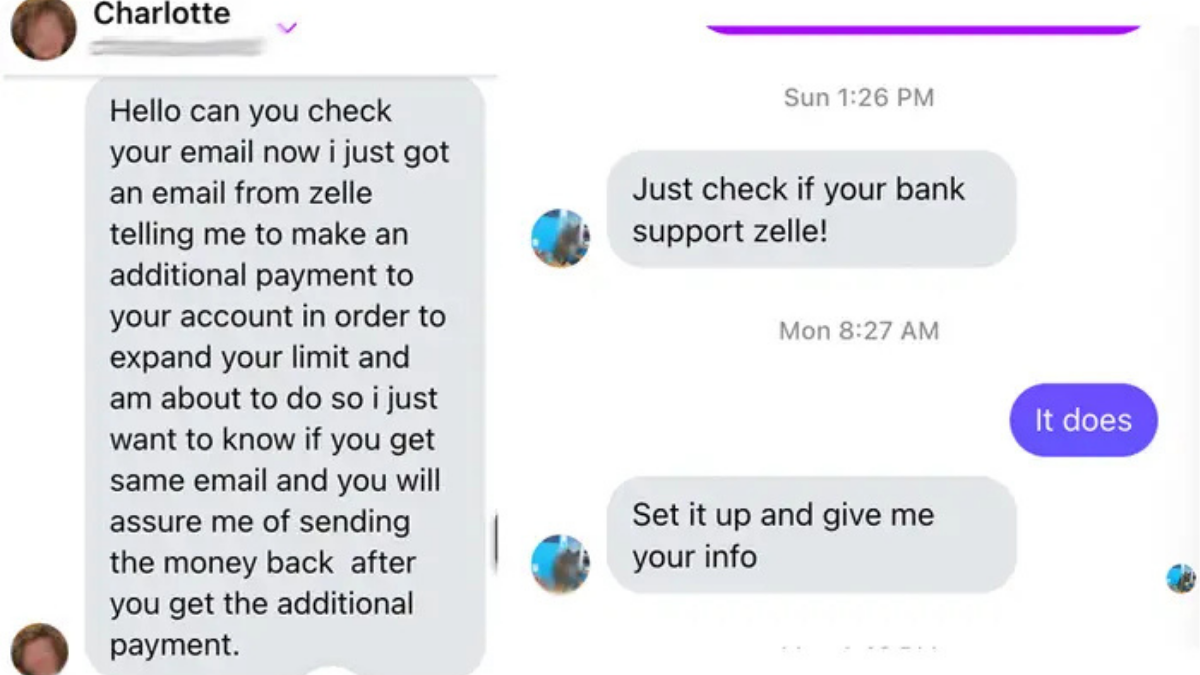
A scammer pretends to buy your item and claims to have sent too much money. They ask you to “refund” the extra via Zelle. The original payment never existed.
“Me-to-Me” Bank Alert Scams
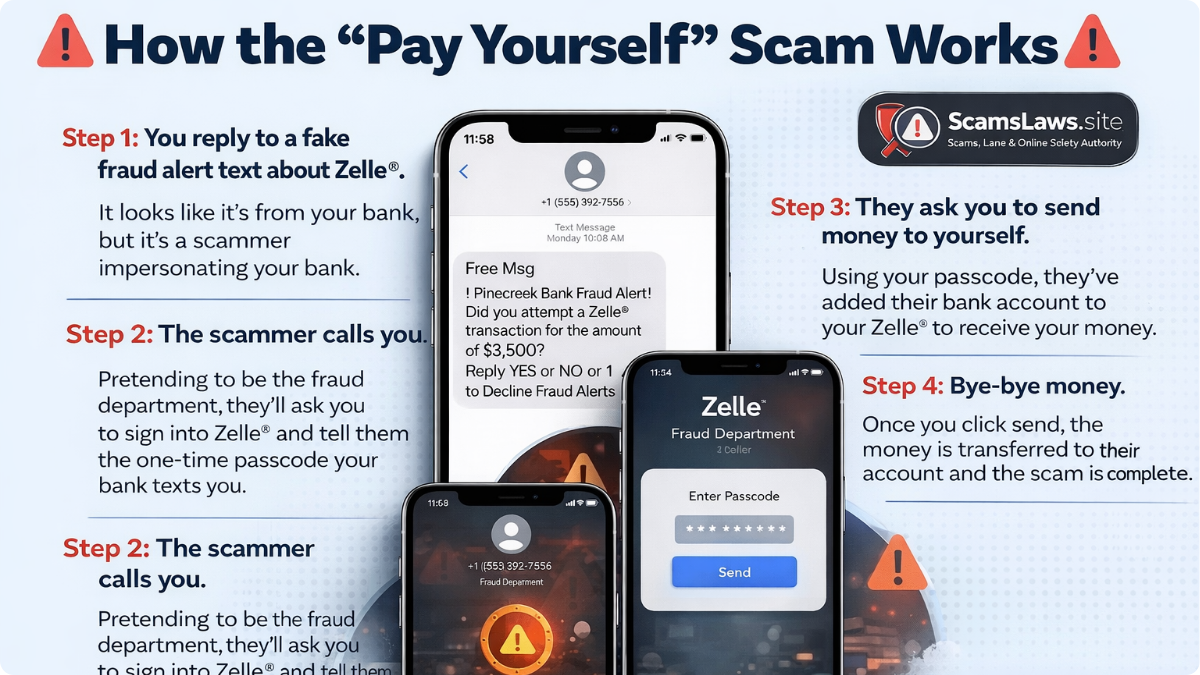
Victims receive a text or email claiming to be from their bank. The message says the account is compromised and instructs the user to send money to themselves using Zelle. In reality, the funds go to the scammer.
Why Zelle Payments Are Hard to Reverse
Zelle transfers are typically:
-
Instant or near-instant
-
Authorized by the account holder
-
Treated like cash transactions
Because the user approves the payment, banks often classify the loss as a scam rather than fraud. This distinction matters.
Unlike credit cards, Zelle does not automatically include chargeback protections. Once the money reaches the recipient’s bank, it may be withdrawn or moved immediately.
Some banks may help in limited situations, but recovery is not guaranteed.
What To Do If You’ve Been Scammed on Zelle
If you believe you’ve sent money as part of a Zelle social media scam payment, act quickly.
Contact Your Bank Immediately
Report the transaction through your bank’s official app or customer service number. Time matters.
Report the Zelle Transaction
Zelle works with banks to investigate reports, even though outcomes vary.
Document Everything
Save messages, usernames, emails, screenshots, and payment details. These may help with internal reviews or reports.
Report the Social Media Account
Flag the scammer’s profile on the platform where contact started. This can help prevent others from being targeted.
Monitor Your Accounts
Watch for follow-up phishing attempts. Scammers sometimes try again after initial success.
Legal & Safety Considerations
Zelle social media scam payments sit at the intersection of digital payments and online communication.
Consumer protection laws, banking policies, and platform rules all play a role. However, regulations vary, and outcomes depend on how the transaction is classified.
Understanding basic social media law helps explain why platforms may limit responsibility for private transactions conducted off-platform.
From a safety perspective, background research matters. Many people now use some form of social media background check to spot fake profiles, recent account creation, or inconsistent activity before sending money.
This information is educational and not legal advice, but awareness can reduce risk.
Understanding basic social media law helps explain why platforms often limit responsibility when scams happen through private messages rather than official payment systems.
How to Prevent Zelle Social Media Scams
Many users now rely on a social media background check to review account age, activity patterns, and warning signs before sending money to someone they only know online.
Only Use Zelle With Trusted Contacts
Zelle is safest when used with people you know personally, not strangers online.
Verify Outside the App
If a request feels urgent, pause and verify using a phone call or known contact method.
Never Send Money to Yourself
Requests to “verify,” “unlock,” or “upgrade” an account by sending money are strong warning signs.
Avoid Clicking Payment Links
Always log into your bank app directly instead of using links from messages.
Watch for Pressure Tactics
Scammers rely on urgency. Legitimate sellers and banks do not rush you into payment decisions.
Frequently Asked Questions
Is it safe to accept Zelle payments from strangers on social media?
Accepting Zelle payments from strangers carries risk. While receiving money is generally safer than sending it, scams involving fake confirmations or overpayments are common. Verification inside your bank app is essential.
Can Zelle refund me if I was scammed?
Zelle itself does not guarantee refunds. Some banks may reimburse losses in limited cases, but many do not if the payment was authorized by the user.
Why do scammers prefer Zelle over other payment methods?
Zelle transfers are fast, widely available, and difficult to reverse. This makes them attractive for social engineering scams.
How can I tell if a Zelle message is fake?
Look for poor grammar, unusual links, requests to send money to yourself, or pressure to act quickly. Banks do not ask for payments to fix accounts.
Is Facebook Marketplace responsible for Zelle scams?
Marketplaces provide reporting tools but generally do not cover losses when payments occur off-platform using third-party services.
Are banks blocking Zelle payments linked to social media?
Some banks have started restricting or warning against Zelle payments tied to social media contacts due to rising scam reports.
Can scammers access my bank account through Zelle?
They usually cannot access your account directly. The risk comes from tricking you into sending money voluntarily.
Conclusion
Zelle social media scam payments continue to rise as online buying, selling, and messaging become more common. These scams do not rely on technical hacks, but on trust, urgency, and confusion.
Understanding how these schemes work, why payments are hard to reverse, and what warning signs to watch for can significantly reduce your risk. Zelle remains a useful tool when used as intended — between people who genuinely know and trust each other.
Staying cautious, slowing down payment decisions, and verifying before sending money are simple habits that can prevent serious financial loss.